The hard part is choosing what to build first.
The strongest idea starts with a costly or slow process, has usable data behind it, and leads to a result the team can measure.
We identify and build AI for processes where it can save time or reduce errors. That includes internal agents, chatbots grounded in your data, automated reporting, and searchable knowledge bases.
We start by identifying the process to improve, the data the solution needs, the risks to control, and the metric that will show whether it worked. Those answers define what we build.
prototype in weeks
from a clear scope to a working first version
evaluated before every deploy
behavior checked against expected results
model-agnostic
OpenAI, Anthropic, Google, or your existing provider
Where teams get stuck
Start with the process: identify the work to change, the available data, the limits, and the metric that will show success.
The strongest idea starts with a costly or slow process, has usable data behind it, and leads to a result the team can measure.
It works when it knows what it can answer, what it doesn't know, and when to ask for help.
Only when it has the context, data, and clear limits it needs to do the work correctly. Otherwise, it creates more work.
Internal systems, permissions, sensitive data, and workflows that change every day have a way of getting involved.
It's scattered across documents, systems, email, chats, and calls. Giving an agent the full picture is harder than it sounds.
Working once in a demo doesn't mean it will keep working when data, prompts, or instructions change.
Moving from “we want to do something with AI” to production means choosing the right problem, starting with a focused version, and measuring what changes. That is how an idea becomes a useful system.
What we build
Technology matters, but it isn't the starting point. We begin with the result the agent should produce, the context it needs, the tools it can use, and the behavior it must sustain.
Agents read information across several sources and handle work that once required manual review. They are useful for processes where cases vary too much for fixed rules.
They turn documents, calls, agreements, tasks, and project updates into a searchable wiki. That information can power AI agents, while your team can assess the state of the documentation, talk with it, and see what is missing.
These interfaces use your documents, knowledge bases, and systems to answer questions. They say when the available information is insufficient and record the unanswered question for review.
Agents research accounts, map markets, spot buying signals, and prepare proposals. They can produce a first draft in 15 to 30 minutes instead of the two to four hours it once took.
Agents turn data from multiple sources into reports, dashboards, or concise summaries. This reduces the time teams spend collecting and formatting the same information by hand.
Hands-on sessions for teams adopting AI in their daily work. We cover choosing use cases, writing prompts, evaluating results, handling data, and deciding which outputs require human review.
How it works
We define the business problem, build a focused first version, test it, and measure the result in production.
Step one
Before discussing prompts, models, or providers, we define the business goal: the process causing problems, the time it consumes, the errors it creates, its users, and the metric for success. If we cannot define that metric, the scope is not ready.
Business metrics we track
If you can't measure it, the problem isn't defined yet.
Readiness
AI is worth considering when:
Security & data
We give each agent only the context and permissions required for its task. Depending on the use case, we anonymize sensitive data, restrict tools, control context, and define access by user.
The agent sees only the data the task requires.
We remove sensitive data before it reaches a model.
We define access rules by role and user type.
We control which tools the agent can use and what it can execute.
We choose models and infrastructure based on your compliance requirements.
Security requirements shape the architecture from the start.
Model-independent
We have worked with OpenAI, Anthropic, and Google. We can also use a provider required by an existing contract, compliance policy, or technical constraint.
We first define the required output, context, tools, limits, and evaluation method. Those requirements determine the model.
Providers we work with



Providers covered by your current contracts
What we define first
Why Acueducto
The same team selects the use case, builds the solution, evaluates it, and prepares it for production.
Who we help
We work with mid-size and enterprise companies in Mexico, Latin America, and the United States that have established operations, usable data, and an implementation budget.
200+ employees, an active digital budget, and revenue roughly between $10M and $500M a year.
Processes and systems produce enough consistent data to connect and evaluate a solution.
Leaders from transformation, operations, product, IT, and business, with a technical counterpart involved.
Industries we tend to work with
Poor fit
An early-stage startup without an implementation budget, stable processes, or a clear operational problem. A stronger fit has a costly or slow process, usable data, and a success metric.
Proof
Real applications of AI strategy, conversational commerce, and operational automation, designed around business impact and implemented with people in control.

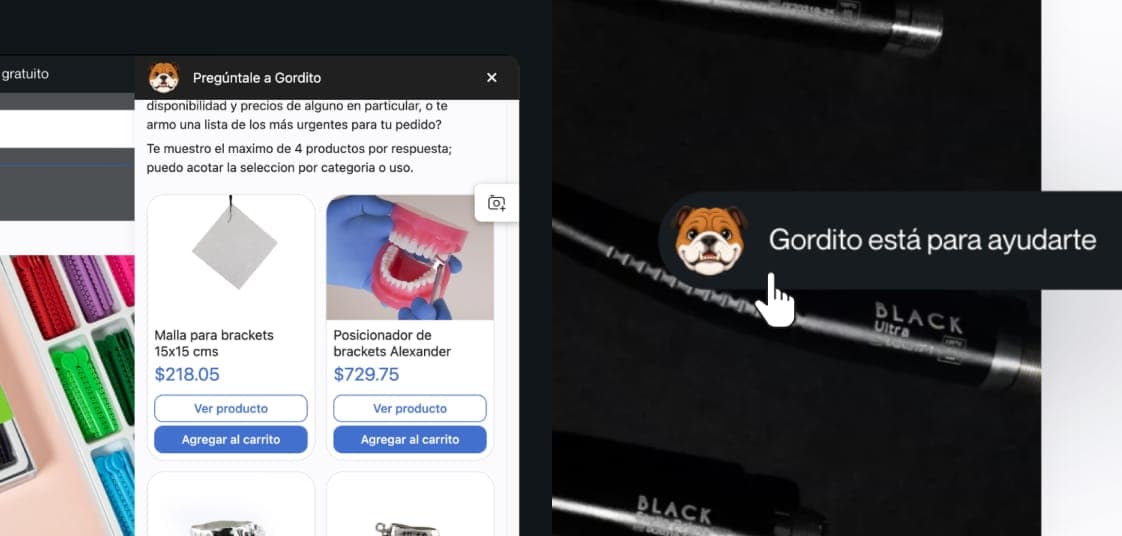
We built an AI system that estimates the amount of steel required for architectural projects. It reduced quote preparation from about two weeks to a few days and helps the team catch calculation errors before they affect margins.
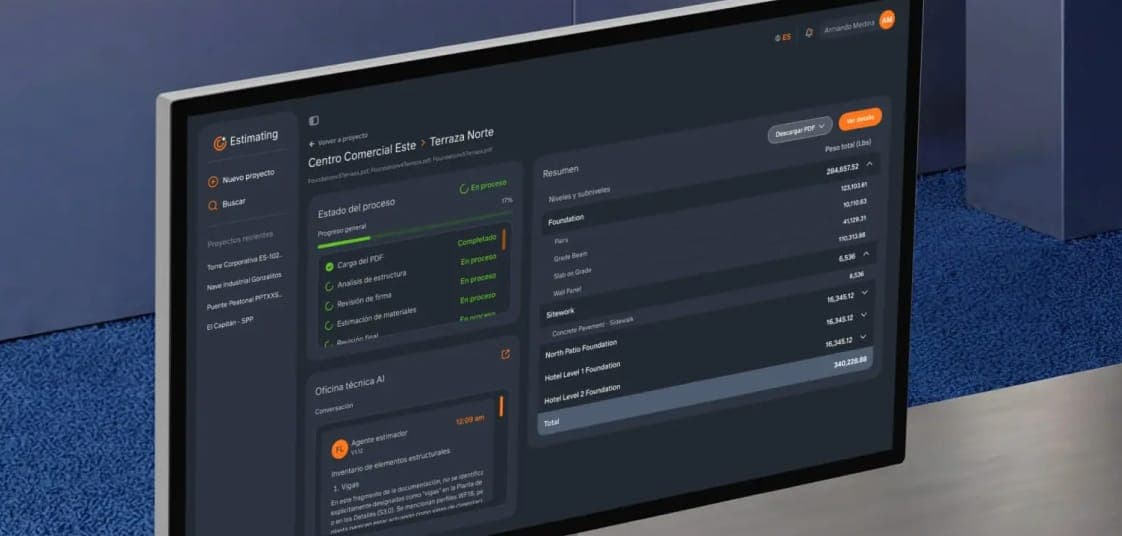

We built an AI assistant for Borgatta's online store. It answers customer questions and recommends products using current catalog data, with tight controls over which information it can use and how it responds.

We built an AI workflow for guest research, outreach emails, follow-up, interview preparation, transcript analysis, episode review, and clip selection. The production team reviews outputs at the steps that require editorial judgment.
Have a process that's begging to be automated? Let's look at it together.
Book a discovery callFAQ
These are the questions we usually cover before scoping the first version.
We only use cookies to give you the best experience but you can review our cookie policy and opt-out if you wish. If you continue to use this site, we’ll asume you’re okay with it.